How to issue a valid tax invoice in the UAE: The complete guide for 2026
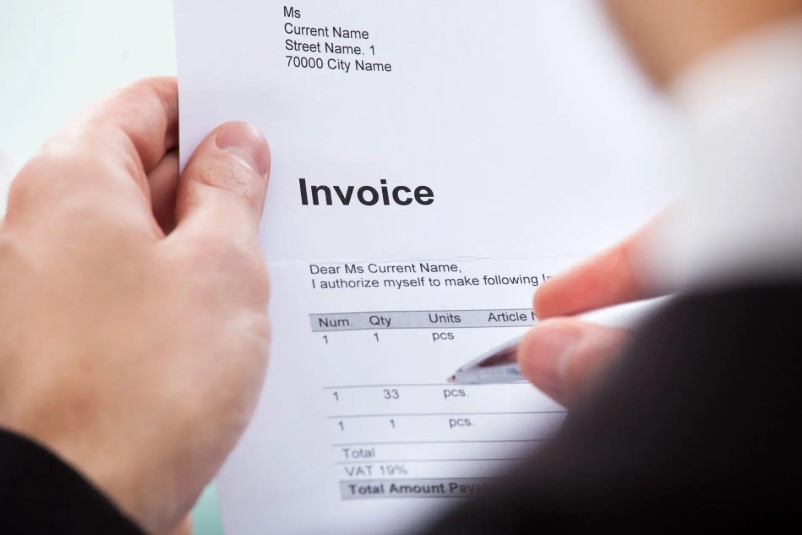
The tax invoice is the cornerstone of the Value Added Tax (VAT) system in the UAE. It is not merely a commercial document to prove a sale, but a legal and financial document that defines the rights and obligations of the parties before the Federal Tax Authority. Understanding how to issue a tax invoice correctly is one of the most important skills that business owners and financial managers must master, as even a minor error in the invoice elements can lead to the rejection of tax refunds or the imposition of hefty administrative penalties. With the development of the legislative framework and its integration with corporate tax, finding ways to issue a tax invoice that complies with modern digital standards has become essential to ensure continued compliance. In this article, we will review in detail how to issue a complete tax invoice, explaining the UAE legal framework and providing practical examples that guarantee your company full legal and financial protection.
Explaining the Basic Concept of a Tax Invoice
Before delving into the details of how to issue a tax invoice, it is important to understand that invoices in the UAE are divided into two main types based on the transaction value and the nature of the client:
Simplified Tax Invoice: This is typically used in the retail sector and for transactions valued at less than AED 10,000. The complete tax invoice: This is our main topic and is used in business-to-business (B2B) transactions or transactions exceeding AED 10,000.
Knowing how to issue a tax invoice is crucial because it is the only document that allows the buyer to claim input tax deductions. Without it, the company loses potentially recoverable funds, unnecessarily increasing operating costs.
The legal framework in the UAE and the Federal Tax Authority's standards:
The invoicing process is governed by Federal Decree-Law No. (8) of 2017 on Value Added Tax and its Executive Regulations. The Federal Tax Authority emphasizes that the primary responsibility for ensuring the accuracy of the invoice lies with the supplier.
By 2026, with the integration of electronic invoicing systems, it will be essential for tax invoice issuance to be compatible with digital accounting systems, where data is automatically linked. UAE law does not tolerate the absence of any mandatory element, and the penalty for issuing an incorrect invoice can reach thousands of dirhams per case. Therefore, accuracy in issuing tax invoices is a preventative investment for your business.
Mandatory Invoice Elements: How to Issue a Complete Tax Invoice
To ensure compliance, here is a detailed list of the elements that must be included when starting the process of issuing a tax invoice:
Document Title: The phrase "Tax Invoice" must be prominently displayed.
Supplier Details: Company legal name, full address, and Tax Registration Number (TRN).
Buyer Details: Buyer legal name, address, and Tax Registration Number (on the complete invoice).
Serial Number: A unique number for each invoice that is easy to trace in the records.
Date: Invoice issue date and delivery date (if different).
Description of Goods/Services: Accurate details of the quantity, unit price, and total amount.
Tax Rate: Clearly state whether the rate is 5%, 0%, or exempt for each item.
Total Amounts: Value before tax, tax amount in UAE Dirhams, and final total inclusive of tax.
Exchange Rate: If the invoice is issued in a foreign currency, the exchange rate approved by the Central Bank of the UAE on the invoice date must be stated.
Practical Steps: How to Issue a Tax Invoice Using Accounting Systems
Implementing how to issue a tax invoice practically requires following a structured document workflow:
Step 1: Verify the TRN: Before issuing, ensure the customer's tax registration number is correct via the Federal Tax Authority portal.
Step 2: Determine the Supply Type: Is it a 5% local supply, a 0% export, or an exempt supply? This significantly impacts how a legally compliant tax invoice is issued.
Step 3: Handle Discounts: If there is a trade discount, it must be deducted from the pre-tax value and clearly displayed in the invoice details.
Step 4: Digital Export: By 2026, it is recommended that tax invoices be issued using a system that generates structured XML or PDF files to facilitate future electronic linking.
Common Invoicing Mistakes in the UAE Market
Many accountants make mistakes that compromise the accuracy of tax invoices. Among the most prominent are:
Neglecting Arabic: The law requires invoices to be in Arabic. English can be included as a translation, but the absence of Arabic may lead to legal repercussions.
Failure to convert amounts to dirhams: Even if the transaction is in US dollars, the tax amount must be stated in UAE dirhams on the invoice.
Inaccurate addresses: Simply writing "Dubai" as the supplier's address without providing details such as a post office box or street address violates the standards for issuing a valid tax invoice.
Issuing "Proforma" Invoices: Confusing a proforma invoice with a final tax invoice is a mistake. A proforma invoice is not valid for tax refunds and does not replace the need to know how to issue an official tax invoice.
Real-Life Examples and Case Studies
Case (1): Office Equipment Supply Company
Company A sold equipment to Company B for AED 20,000.
When applying the procedure for issuing a tax invoice, Company A entered its own and the buyer's TRN numbers, calculated the tax (AED 1,000), and issued the invoice with a unique serial number.
Result: Company B was able to recover the AED 1,000 in its next tax return without any issues.
Case (2): Exporting Goods Outside the UAE
A clothing company exported a shipment to Saudi Arabia.
In this case, the procedure for issuing a tax invoice requires setting the rate to (0%) and attaching the customs clearance documents to the invoice to prove the transaction's validity to the Federal Tax Authority.
Professional Tips to Avoid Financial Penalties
Organized Archiving: Keep invoices issued for at least 5 years (15 years for real estate) in an organized manner that is easily accessible during audits.
Technical Upgrades: Invest in accounting software that complies with UAE regulations to ensure automated tax invoice issuance, eliminating human error.
Regular Reconciliation: Compare the total tax amounts on issued invoices with the amounts declared in the quarterly tax return.
Ongoing Training: Ensure your sales team understands how to issue correct tax invoices, as they are the first line of defense in dealing with customers.
FAQ Section
Q: Can I issue a tax invoice by hand?
A: Legally, this is permissible, provided all mandatory elements are present. However, in the current UAE business environment in 2026, using electronic systems is strongly recommended to avoid errors associated with traditional tax invoice issuance methods and to ensure compliance with corporate tax regulations.
Q: What should I do if I discover an error in an invoice that has already been issued?
A: Do not delete the invoice; Instead, a "Tax Credit Notice" or "Tax Debit Notice" must be issued to correct the error. This process complements the process of issuing a tax invoice professionally.
Q: Does the process of issuing a tax invoice differ for companies in free zones?
A: Yes, it depends on whether the free zone is a "Designated Zone" or not, and the nature of the goods movement. This requires careful tax consultation to ensure compliance.
In conclusion, excelling at issuing a correct tax invoice reflects your company's professionalism and commitment to the laws in force in the UAE. The tax invoice is the bridge connecting your business transactions to a transparent and accurate global financial system. As the Federal Tax Authority continues to develop its regulatory tools for 2026, the accuracy of the elements of how to issue a tax invoice remains the strongest guarantee for protecting your cash flow and brand reputation from tax risks. Remember, investing time in fine-tuning your invoicing system will save you significant time and money in the future.
If you're looking for an expert partner who ensures all your invoices comply with the authority's standards and helps you set up a comprehensive accounting system that simplifies the process of issuing tax invoices, ProTaxKeys is the ideal choice. We put our extensive experience in the UAE market at your service to guarantee your tax compliance and allow you to focus entirely on growing and expanding your business, free from the complexities of fines and unexpected audits.